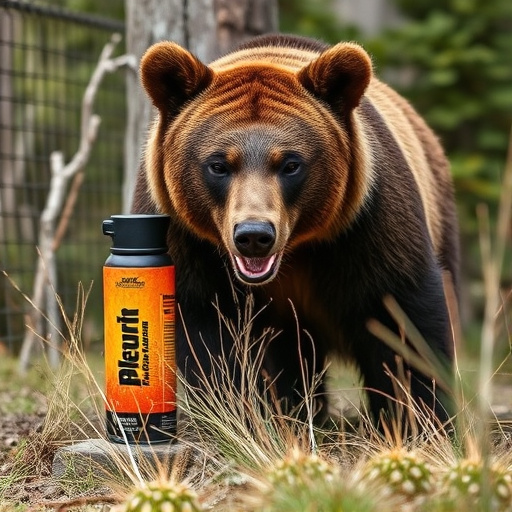
Understanding bear spray range dynamics (up to 30 ft) is crucial for effectiveness. Best carrying techniques involve keeping canisters within arm's reach and practicing spraying at various distances. User technique & environmental conditions significantly impact deterrence. Securing bear spray with a lanyard for easy access enhances safety in bear country. Experimentation and practice are vital for optimal positioning and swift response during encounters.
“Discover the power of bear spray as a crucial defense tool in unpredictable wild encounters. This comprehensive guide explores the effective range of bear spray, offering insights into its dynamics and how it can be maximized. From understanding the optimal carrying techniques to identifying factors influencing its reach, this article equips readers with knowledge to navigate risky situations. Learn best practices for coverage and stay protected while exploring nature’s realm. Uncover the secrets to ensuring your safety in areas frequented by bears, especially when employing the best bear spray carrying techniques.”
- Understanding Bear Spray Range Dynamics
- Best Practices for Optimal Coverage
- Factors Influencing Effective Distance
- Carrying Techniques for Maximum Protection
Understanding Bear Spray Range Dynamics
Understanding Bear Spray Range Dynamics is crucial for ensuring its effectiveness as a deterrent. The range at which bear spray can be used varies based on several factors, including wind conditions, terrain, and the specific type of spray. In ideal conditions, where there’s little to no wind, the effective range can extend up to 30 feet (9 meters). However, in more challenging environments, this range can significantly decrease.
The best Bear Spray Carrying Techniques involve keeping the canister close at hand—ideally within arm’s reach—to maximize response time when facing an encounter. It’s also important to understand that bear spray is designed for immediate use during a confrontation, not for long-term protection against wandering bears. Always follow safety guidelines and stay alert in bear country to make the most of your chosen deterrent.
Best Practices for Optimal Coverage
When it comes to bear spray, understanding optimal carrying techniques and best practices is vital for effective deterrence. For maximum coverage, users should aim for a “wrist-to-wrist” technique, ensuring the spray can reaches both hands. This method allows for quick deployment and ensures you’re prepared if a bear approaches from any angle.
The range of bear spray varies depending on factors like wind conditions and canister size, but generally, it’s recommended to practice spraying at different distances. Start close to your body—around 20 feet—and gradually increase the distance during training sessions. This familiarizes you with both the spray pattern and its reach, making real-life encounters less stressful. Always carry bear spray within easy reach, and remember that proper usage requires practice and familiarity.
Factors Influencing Effective Distance
The effectiveness of bear spray as a deterrent is influenced by several key factors. One of the primary considerations is the user’s carrying technique—how close the sprayer gets to the potential bear before deployment. The best bear spray carrying techniques involve maintaining a safe distance, typically between 20 to 30 feet (6 to 9 meters), allowing for accurate spraying while keeping the user at a safe range.
Another crucial element is the wind direction and strength. Tailwinds can carry the spray back towards the user, reducing its effectiveness, whereas headwinds may disperse the spray too quickly, minimizing impact. Understanding these factors enables users to optimize their positioning and deployment technique, ensuring bear spray remains a reliable deterrent in unpredictable wilderness encounters.
Carrying Techniques for Maximum Protection
When it comes to ensuring maximum protection in bear country, proper carrying techniques for your bear spray are essential. The best method involves keeping the spray readily accessible and close at hand. This typically means attaching it to your belt or backpack using a secure lanyard or strap. Positioning it within easy reach allows for a swift response during an encounter.
Experiment with different attachment points to find what works best for you, considering factors like comfort and ease of retrieval. Remember, the goal is to have the spray readily available when needed, so practice reaching for it instinctively. By mastering these best practices for carrying bear spray, hikers and outdoor enthusiasts can greatly enhance their safety in potential bear encounters.
Bear spray is an effective deterrent, but understanding its range and optimal carrying techniques is crucial. By knowing the factors influencing distance and best practices, you can ensure maximum protection during outdoor activities in bear country. Mastering these skills enables folks to navigate potentially dangerous situations with confidence, making it a game-changer for anyone venturing into bustling wilderness areas. As you delve into these techniques, remember that proper training and awareness are key to a safe and enjoyable outdoors experience.