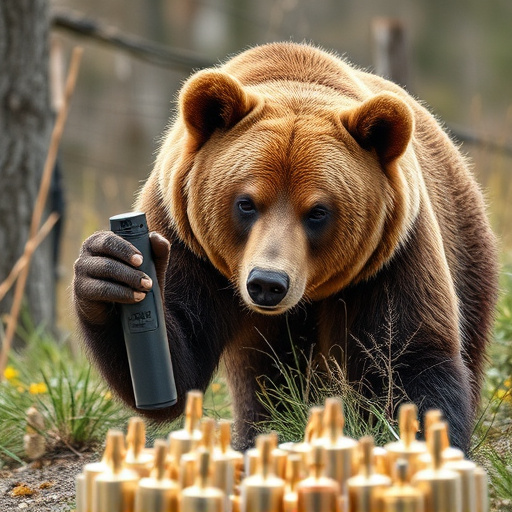
Understanding bear spray range dynamics is key to effectiveness as a deterrent. Optimal distance varies based on can size, air conditions, and terrain (30-40 feet), requiring accessible carry, proper deployment techniques, regular training, and awareness of wind, terrain, and spray type for successful deterrence. Best practices include secure attachment to waist or chest packs, aiming for face and eyes, and familiarizing with range during practice.
Bear spray is a valuable tool for outdoor enthusiasts navigating risky territories. Understanding its effective range is crucial for safety. This article explores the dynamics of bear spray range, offering insights into best practices and factors influencing its performance. From optimal carrying techniques to recognizing environmental conditions impacting spray dissipation, these strategies ensure maximum protection when encountering bears. Discover expert tips for selecting the right gear and positioning yourself safely in potentially dangerous situations.
- Understanding Bear Spray Range Dynamics
- Best Practices for Optimal Effective Range
- Factors Affecting Spray Dissipation Distance
- Carrying Techniques for Maximum Protection
Understanding Bear Spray Range Dynamics
Understanding Bear Spray Range Dynamics
The effectiveness of bear spray as a deterrent is heavily influenced by its range. The optimal distance for application varies depending on factors like can size, air conditions, and terrain. Typically, most bear spray cans offer protection within a 30-foot (9-meter) radius when correctly used. However, in ideal conditions, the range can extend up to 40 feet (12 meters). Mastering the best bear spray carrying techniques is crucial for maximizing this effective range.
Carrying your spray in an accessible hand and learning proper deployment methods are key. Practice aiming at various distances to ensure you understand how far your specific spray reaches. Remember, the closer you are to a potential threat, the more effective the spray will be. Regular training sessions can significantly improve your reaction time and targeting accuracy, ensuring you make the most of your bear spray’s deterrent capabilities in an emergency situation.
Best Practices for Optimal Effective Range
Carrying bear spray effectively requires understanding and adhering to best practices for optimal range. One of the most important factors is to always keep your spray in easy reach—ideally within a quick, single-motion grab. This means securing it on your waist or in a vest pocket, not buried in a backpack. When navigating through dense foliage or rough terrain, face the wind away from you; this technique helps ensure that the spray stays directed towards potential threats.
Additionally, practice targeting practices to maximize effectiveness. Aim for the bear’s face and eyes—the closer to these sensitive areas, the faster the spray will take effect. Regularly test your spray’s range during training sessions, simulating different scenarios to familiarize yourself with its reach. Remember that distance can be affected by wind, terrain, and even humidity; staying aware of these variables is crucial for successful deterrence.
Factors Affecting Spray Dissipation Distance
Several factors play a crucial role in determining how far bear spray can effectively dissipate, making it essential to understand these variables for optimal usage. One primary factor is wind speed and direction. Bear spray works best when sprayed into still or lightly breezy conditions, as stronger winds can quickly blow away the aerosolized liquid before it has a chance to take effect. The terrain’s topography is another critical consideration; spray will tend to accumulate in depressions and valleys, making high-altitude areas or places with significant slopes less ideal for its dispersal.
Additionally, the type of bear spray and its specific formulation influence the range. Some sprays are designed for short bursts and maximum concentration, while others offer a longer-lasting mist. The container’s size and the user’s carrying techniques also contribute to the overall reach. Best Bear Spray Carrying Techniques involve secure attachment to a belt or vest, ensuring quick access during encounters, which can increase the effective range by allowing users to react faster and more precisely.
Carrying Techniques for Maximum Protection
Carrying your bear spray effectively is key to maximizing its deterrent range and ensuring your safety during outdoor activities in bear country. The best techniques involve keeping it readily accessible while maintaining a safe distance from potential threats. One proven method is to use a chest or waist pack, which allows for quick retrieval with either hand, even while wearing heavy backpack gear. Alternatively, attaching the spray to your belt or using a specialized holster can ensure it’s always within reach, ready to deploy at a moment’s notice.
It’s crucial not to store bear spray in your backpack’s main compartment, as bears might be able to access it if they knock you down. Instead, keep it in a side pocket or external holster for easy, hands-free deployment. Regularly practicing the carrying technique and familiarizing yourself with the spray’s trigger and mechanism can make all the difference during an encounter, allowing you to respond swiftly and effectively.
Bear spray is an essential tool for outdoor enthusiasts navigating wild terrains. Understanding its effective range and optimal carrying techniques can significantly enhance personal safety. By grasping the dynamics of spray dispersion, practicing best practices, and considering various factors, individuals can ensure maximum protection against potential bear encounters. Embracing these strategies empowers folks to explore nature with confidence, knowing they possess a reliable deterrent within their grasp. When it comes to Best Bear Spray Carrying Techniques, knowledge is power—a crucial step towards fostering a safe and enjoyable outdoor experience.